

Finishing FSC or A-Levels opens the door to global education pathways, and the UAE has quickly become one of the most attractive destinations for international students. With world-ranked universities, modern campuses, and strong career outcomes, studying in the UAE after FSC or A-Levels is now a smart, future-focused decision. Learn which UAE universities accept 12 years of education and how direct admission works for international students.
This complete guide explains everything you need to know, eligibility, programs, costs, admissions, and career prospects, so you can move forward with clarity and confidence.
Why the UAE Is a Top Choice After FSC or A-Levels

The UAE has positioned itself as an international education hub, especially in cities like Dubai, Abu Dhabi, and Sharjah. Students from Pakistan, the UK, Africa, and Asia choose the UAE because it combines globally recognized degrees with a culturally familiar environment. To manage academic pressure in such a diverse setting, many students also rely on assignment help for deadlines to stay organized, meet submission requirements on time, and maintain consistent academic performance.
Key reasons students prefer the UAE:
- English-taught degree programs
- International accreditation
- Safer campuses and modern infrastructure
- Proximity to Pakistan and South Asia
- Strong employment exposure during and after studies
For FSC and A-Level students, the UAE offers a smooth academic transition without unnecessary foundation years in many cases.
Understanding Eligibility After FSC or A-Levels
Eligibility requirements vary by university and program, but most UAE universities recognize FSC (Pre-Engineering, Pre-Medical, ICS) and A-Levels.
Eligibility After FSC (Intermediate)
Students with FSC backgrounds are eligible for many undergraduate programs if they meet subject and percentage requirements.
Typical criteria include:
- Minimum 50%–60% overall marks
- Relevant subject background (Maths, Physics, Biology, etc.)
- Equivalence certificate (in some cases)
Pre-Medical students can also shift to non-medical programs like business, IT, or psychology in many universities.
Eligibility After A-Levels
A-Level students usually benefit from flexible admission policies.
Common requirements:
- 2–3 A-Level subjects passed
- Minimum grade thresholds depending on the program
- AS-Level acceptance in selected universities
Some universities also accept mixed qualifications (O-Levels + A-Levels).
Popular Degree Programs After FSC / A-Levels

The UAE offers a wide range of undergraduate programs aligned with global job markets.
Engineering and Technology Programs
Ideal for FSC Pre-Engineering and A-Level Maths students.
Popular options:
- Computer Engineering
- Electrical and Mechanical Engineering
- Artificial Intelligence
- Data Science
- Software Engineering
Many campuses are located near technology hubs like Dubai Silicon Oasis and Masdar City.
Medical and Health-Related Programs
While MBBS seats are limited, alternatives are widely available:
- Pharmacy
- Biotechnology
- Nursing
- Medical Laboratory Sciences
- Public Health
These programs follow international medical education standards.
Business, Management, and Finance
Business programs are among the most accessible after FSC or A-Levels.
Common choices include:
- Business Administration
- Accounting and Finance
- Marketing and Digital Marketing
- Human Resource Management
- Entrepreneurship
Dubai’s corporate ecosystem provides strong internship exposure.
IT, Computer Science, and Cybersecurity
High demand and strong job outcomes make IT programs extremely popular.
Options include:
- Computer Science
- Information Technology
- Cybersecurity
- Cloud Computing
- Game Development
These degrees are often updated to match industry needs.
Media, Design, and Creative Fields
Students with arts or mixed backgrounds can explore:
- Media and Communication
- Graphic Design
- Interior Design
- Animation and Multimedia
Dubai’s creative zones support real-world project exposure.
Top UAE Universities Accepting FSC and A-Levels
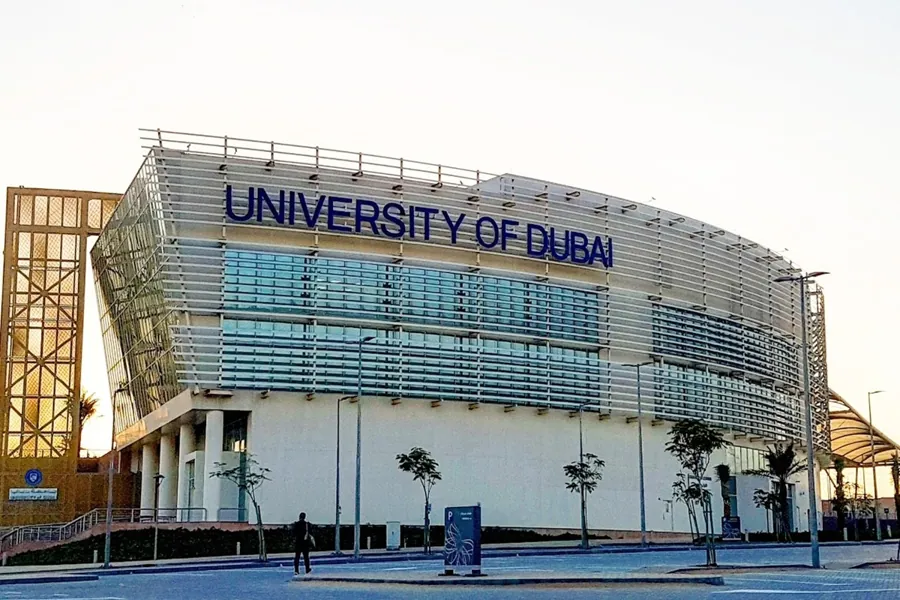
Many public and private universities accept international students directly after secondary education.
Universities in Dubai
Dubai hosts globally affiliated campuses and private universities offering UK, US, and Australian degrees.
Highlights:
- Strong international recognition
- Internship-driven programs
- Industry networking opportunities
Explore a complete list of universities in Dubai offering internationally recognized undergraduate programs.
Universities in Sharjah
Sharjah is known for academically focused institutions and comparatively affordable living.
Benefits:
- Lower accommodation costs
- Strong academic reputation
- Family-friendly environment
Universities in Abu Dhabi
Abu Dhabi universities emphasize research, innovation, and public sector partnerships.
Students benefit from:
- High academic standards
- Advanced research facilities
- Government-supported initiatives
Admission Process Step by Step
Applying to study in the UAE is straightforward if planned properly.
Step 1: Choose the Right Program and University
Match your FSC or A-Level subjects with program requirements.
Step 2: Prepare Required Documents
Usually required:
- Academic transcripts
- Passport copy
- Personal statement
- Passport-size photographs
Step 3: Submit Online Application
Most universities offer digital application portals with fast processing.
Step 4: Receive Offer Letter
Conditional or unconditional offers are issued based on eligibility.
Step 5: Apply for Student Visa
Universities often assist with visa processing once fees are paid.
Cost of Studying in UAE After FSC or A-Levels
Costs vary by city, university, and program type.
Tuition Fees
Average annual tuition ranges:
- AED 35,000 to AED 80,000
- Medical and engineering programs may cost more
Private universities usually charge higher fees than public ones. This guide covers foundation year options for students who need academic or subject bridging before degree entry.
Living Expenses
Monthly living costs may include:
- Accommodation
- Food and transport
- Health insurance
Sharjah is generally more affordable than Dubai.
Scholarships and Fee Reductions
Many universities offer financial support for international students.
Merit-Based Scholarships
Awarded based on:
- High FSC percentages
- Strong A-Level grades
Discounts may range from 10% to 50%.
Early Application Benefits
Students applying early often receive:
- Better scholarship consideration
- Flexible payment plans
- Priority program placement
Work Opportunities During Study
International students can work part-time under UAE regulations.
Common opportunities:
- Internships
- Campus jobs
- Industry placements
These roles enhance employability after graduation.
Career Prospects After Graduation

UAE degrees are globally recognized, allowing graduates to pursue careers locally or internationally.
Popular employment sectors:
- Technology and IT
- Healthcare
- Finance and banking
- Aviation and logistics
- Marketing and media
The UAE also offers post-study work opportunities in many industries.
Why Early Planning Matters
Late applicants often face:
- Limited program availability
- Fewer scholarship options
- Visa processing delays
Starting early gives you control over choices and costs. Discover budget-friendly universities in the UAE that offer quality education for international students.
FAQs
Q1. Can I study in UAE after FSC?
A. Yes, many UAE universities accept FSC students directly into bachelor’s programs.
Q2. Is A-Level accepted in UAE universities?
A. Yes, A-Levels are widely accepted with flexible subject combinations.
Q3. Do I need IELTS after FSC or A-Levels?
A. Some universities waive IELTS if English was the medium of instruction.
Q4. Which city is best for students in UAE?
A. Dubai offers exposure and internships, while Sharjah is more affordable.
Q5. Are UAE degrees recognized internationally?
A. Yes, most UAE universities are internationally accredited.
Final Thoughts
Studying in the UAE after FSC or A-Levels offers global education, cultural comfort, and strong career pathways, all in one destination. With the right planning, this transition can shape your future faster than you expect. For a complete overview of admissions, universities, costs, and student life, this ultimate guide to studying in the United Arab Emirates helps students plan every step with confidence.
Admissions for upcoming intakes are filling quickly, connect with an education advisor today to secure your preferred university, maximize scholarships, and begin your UAE study journey before deadlines close.